
Resources
Case Studies
Every project starts with a problem the catalog can’t solve. See how utilities and commercial & industrial operators worked with our engineers to define the challenge, build the solution, and measure what changed on the grid.
39 results
Case Study
Utilities
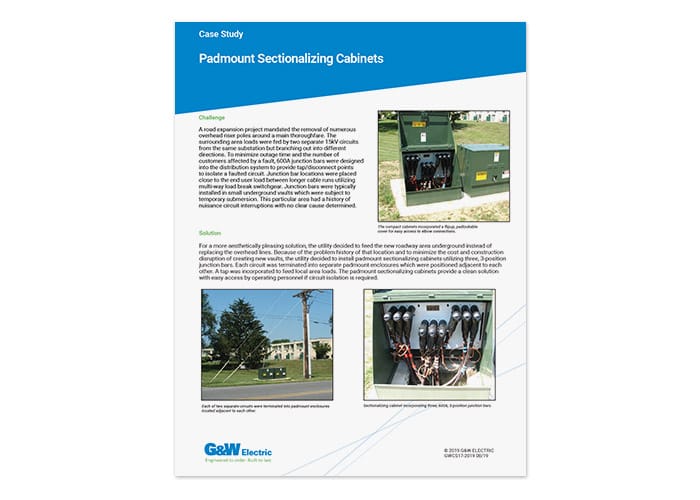
Padmount Sectionalizing Cabinets
CHALLENGE:A road expansion project mandated the removal of numerous overhead riser poles around a main thoroughfare. The surrounding area loads were fed by two separate 15kV circuits from the same substation but branching out…
Case Study
Utilities
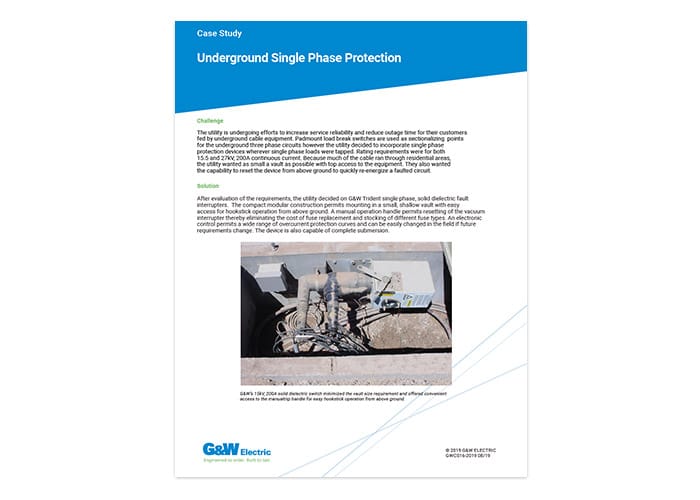
Underground Single Phase Protection
CHALLENGE:The utility is undergoing efforts to increase service reliability and reduce outage time for their customers fed by underground cable equipment. Padmount load break switches are used as sectionalizing points for the underground three…
Case Study
Utilities
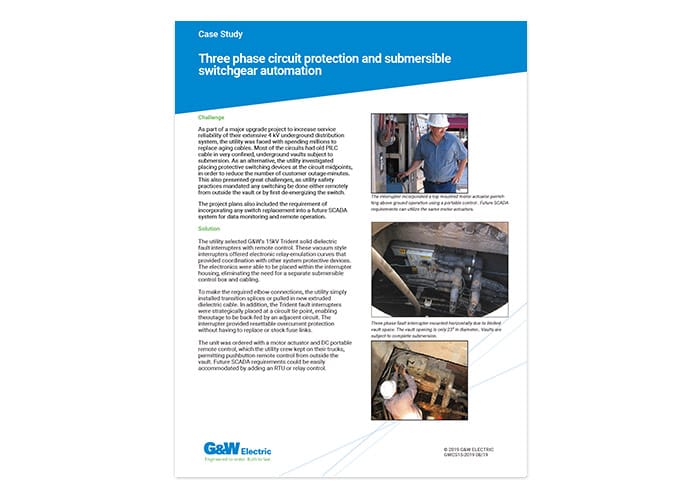
Underground Circuit Protection and Submersible Switchgear
CHALLENGE:As part of a major upgrade project to increase service reliability of their extensive 4kV underground distribution system, the utility was faced with spending millions to replace aging cables. Most of the circuits had…

Case Study
Utilities
Residential Automatic Feeder Restoration
CHALLENGE:A major Midwest utility has been focusing on automation to help assure reliable power to its customers. For years they have incorporated a SCADA system for transmission line and distribution substation monitoring. As a…
Case Study
Utilities
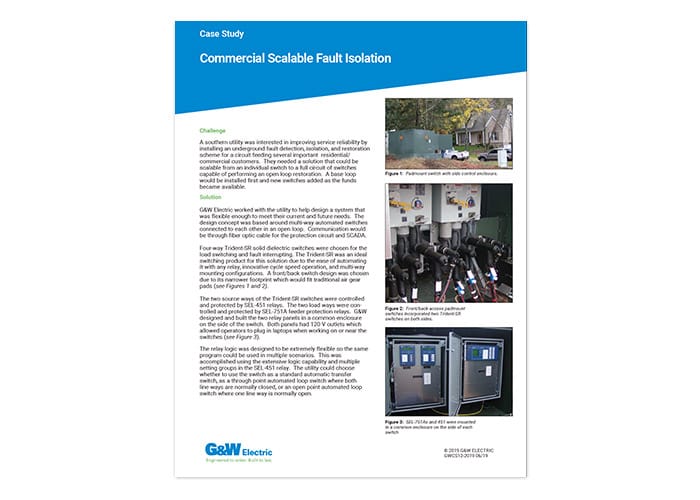
Commercial Scalable Fault Isolation
CHALLENGE:A southern utility was interested in improving service reliability by installing an underground fault detection, isolation, and restoration scheme for a circuit feeding several important residential/commercial customers. They needed a solution that could be…
Case Study
Utilities
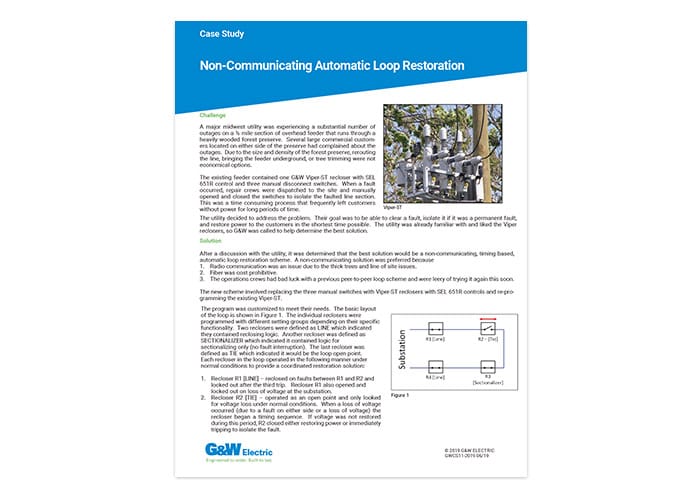
Non-Communicating Automatic Loop Restoration
CHALLENGE:A major midwest utility was experiencing a substantial number of outages on a ½ mile section of overhead feeder that runs through a heavily wooded forest preserve. Several large commercialcustomers located on either side…
Case Study
Utilities
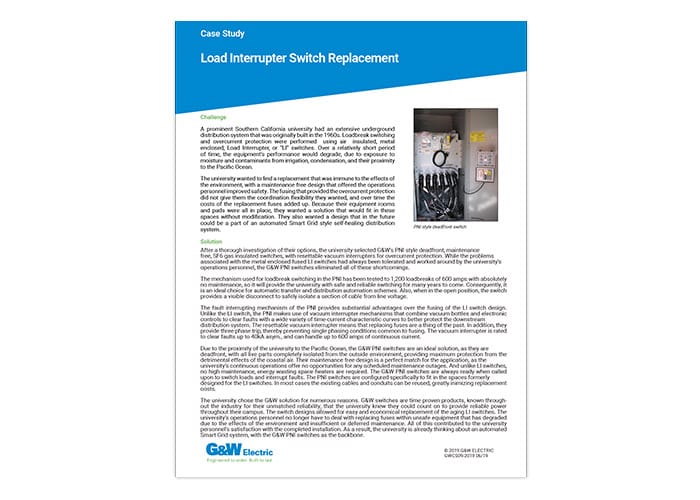
Load Interrupter Switchgear Replacement
CHALLENGE:A prominent Southern California university had an extensive underground distribution system that was originally built in the 1960s. Loadbreak switching and overcurrent protection were performed using airinsulated, metal enclosed, Load Interrupter, or “LI” switches.…

Case Study
Renewable Intertie Customer Application
CHALLENGE:A state college was pursuing options to reduce their carbon footprint and provide a sustainable energy resource to meet their growing electric demands. With assistance from a state-backed initiative, funding was secured to construct…
Case Study
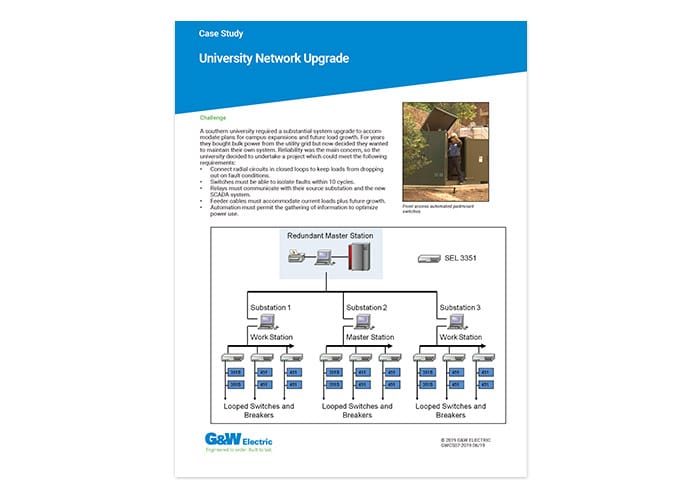
University Network Upgrade with Automation
CHALLENGE:A southern university required a substantial system upgrade to accommodate plans for campus expansions and future load growth. For years they bought bulk power from the utility grid but now decided they wanted to…
Case Study
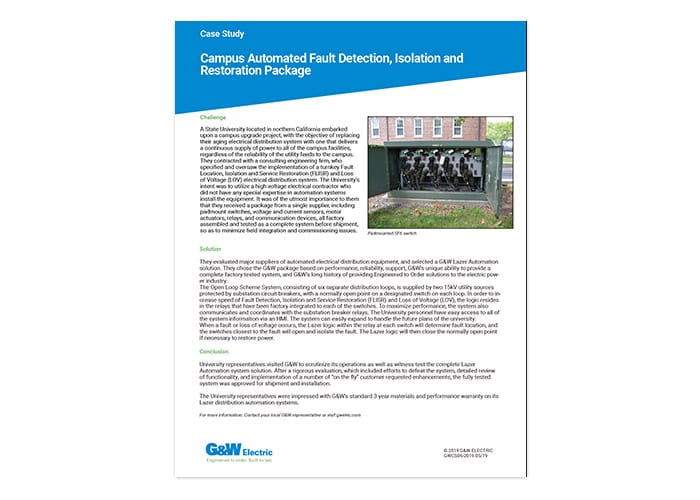
Campus Automated Fault Detection, Isolation, and Restoration Package
CHALLENGE:A State University located in northern California embarked upon a campus upgrade project, with the objective of replacing their aging electrical distribution system with one that delivers a continuous supply of power to all…
Case Study
Utilities
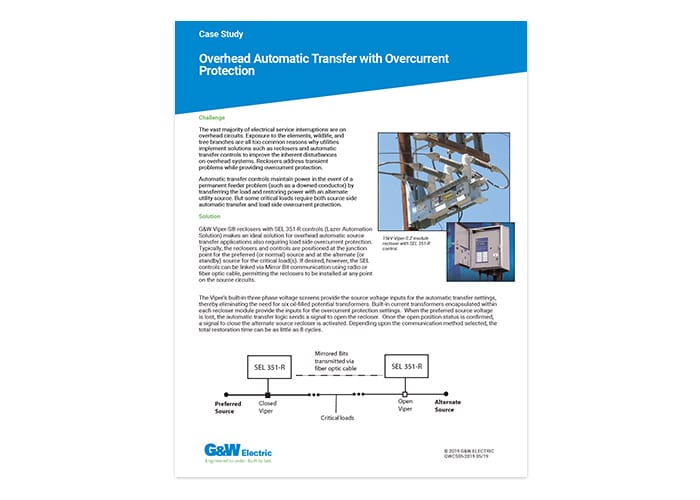
Overhead Automatic Transfer with Overcurrent Protection
CHALLENGE:The vast majority of electrical service interruptions are on overhead circuits. Exposure to the elements, wildlife, and tree branches are all too common reasons why utilities implement solutions such as reclosers and automatic transfer…
Case Study
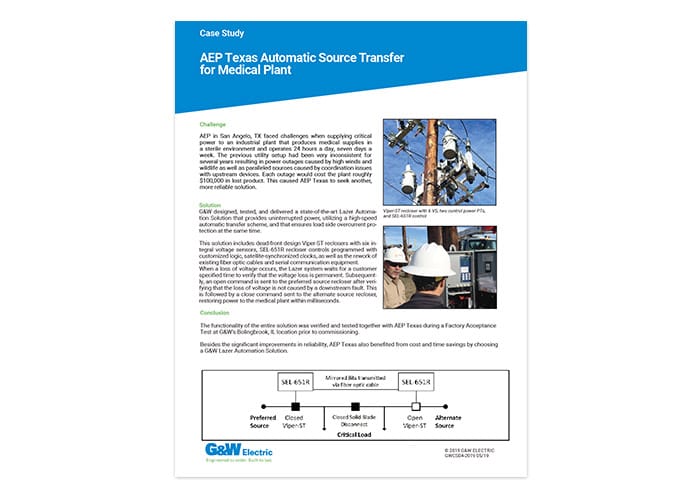
AEP Texas Automatic Source Transfer for Medical Plant
CHALLENGE:AEP in San Angelo, TX faced challenges when supplying critical power to an industrial plant that produces medical supplies in a sterile environment and operates 24 hours a day, seven days a week. The…
We start with the diagnosis, not the datasheet
Engineered to order means the specification comes from the site — footprint constraints, flood exposure, the automation platform already in service, the crews who will maintain it. Our application engineers work the problem with your team before anything is built.
These case studies are the record of that work: what was constraining the network, what was engineered in response, and what the utility measured afterward.
Engineered to order. Built to last.
Engineered for your grid, not off the shelf
Working through a footprint constraint, a submersibility requirement, or an SF6 transition of your own? Start with an application engineer, not a catalog.


