
Resources
Case Studies
Every project starts with a problem the catalog can’t solve. See how utilities and commercial & industrial operators worked with our engineers to define the challenge, build the solution, and measure what changed on the grid.
39 results
Case Study
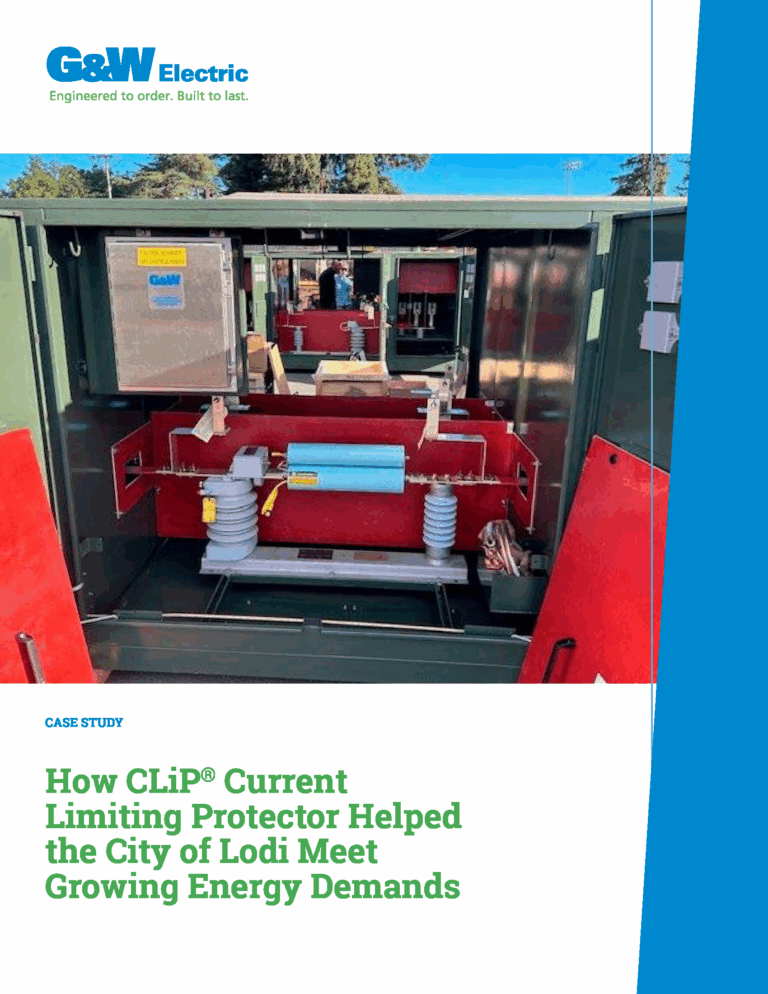
How CLiP® Current Limiting Protector Helped the City of Lodi Meet Growing Energy Demands
BACKGROUND: The City of Lodi is located in San Joaquin County, California, with a population of over 66,000. Lodi Electric Utility was founded in 1910 to serve the community with reliable, affordable, clean and…

Case Study
Modernizing Critical Power Infrastructure at Hotel Playa Grande Resort – G&W Electric Retrofits Automatic Control Solution
The Hotel Playa Grande Resort is a luxury beachfront destination located in the heart of Los Cabos, Mexico, renowned for its stunning views of the Pacific Ocean and its blend of traditional Mexican charm…

Case Study
Government Agency Bridge Upgrade
Challenge:An inland waterway bridge built in the 1950’s was in serious need of an upgrade. It was originally constructed as a two lane bridge but upgraded to four lanes in the 1960’s. The electrical…

Case Study
Automatic Fault Isolation
CHALLENGE:As part of an extensive effort to reduce system outages and increase service reliability, a government agency is in the process of converting all overhead distribution lines to underground. At the same time, the…

Case Study
Three Phase Protection – Oil Fuse Cutout Replacement
CHALLENGE:The university added new buildings which required three phase protection. The existing service is an older underground system utilizing oil fuse cutouts here overcurrent protection was required. The university has a long-term plan to…

Case Study
Decades of Reliable Success in Latin America with the CLiP Current Limiting Protector
Pedra Agroindustrial S/A, a Brazil-based renewable energy company, has been operating since 1931 planting and harvesting sugarcane. With four production facilities located in the states of São Paulo and Mato Grosso do Sul, the…
Case Study
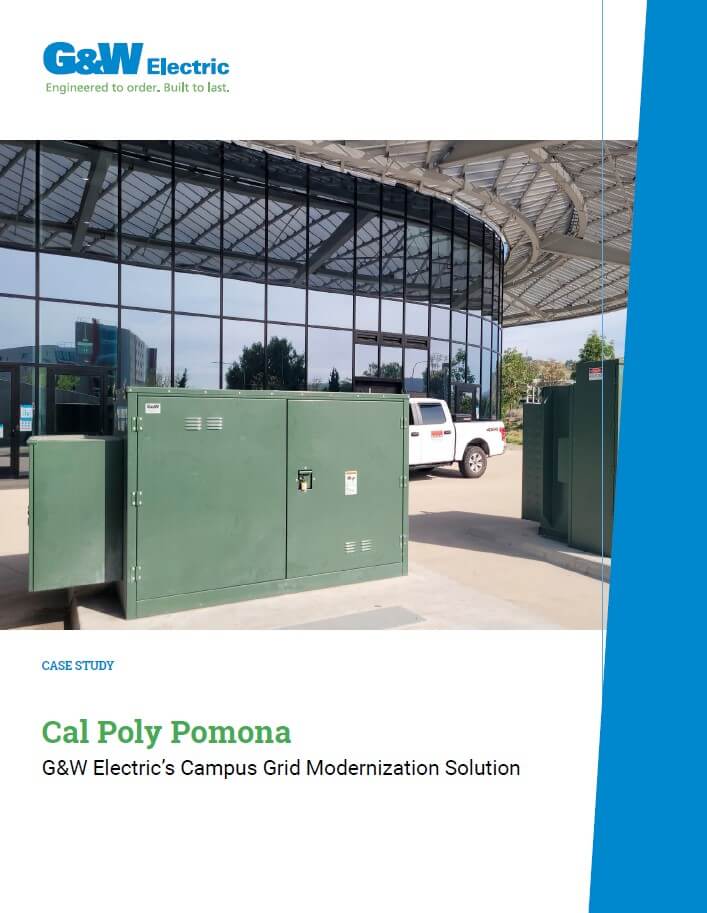
Cal Poly Pomona – G&W Electric’s Campus Grid Modernization Solution
Cal Poly Pomona is a state university located in Pomona, California, spanning 1400 acres and enrolling 30,000 students. The university required a complete modernization of its campus-wide electrical distribution system. This process required major…
Case Study
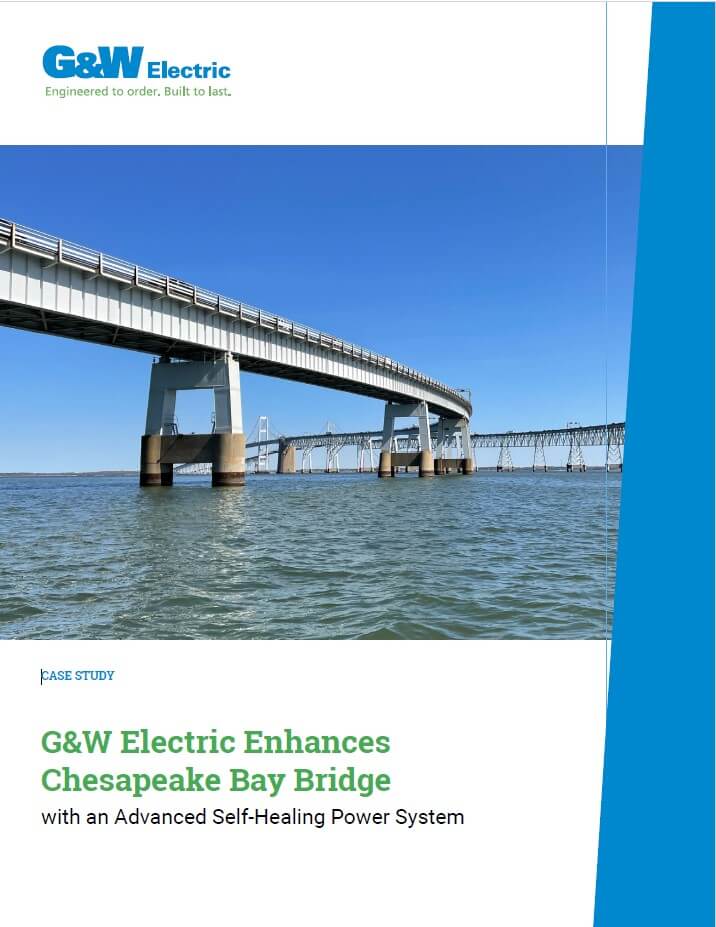
G&W Electric Enhances Chesapeake Bay Bridge with an Advanced Power System
Aging electrical cables, switches and distribution infrastructure are prone to multiple failures every year, resulting in traffic disruptions, which back up vehicles for multiple miles. These disruptions are not only financially costly due to…

Case Study
Oncor – Understanding Your Power System: A Case Study of One Utility’s Approach
The history of power distribution in North America is a tale of innovation, competition and evolution. The AC-DC wars of the late 19th century culminated in the 1893 Chicago World’s Fair, where AC power…

Case Study
G&W Electric Turnkey Medical Center Solution Improves Energy Reliability, Streamlines Fault Response, Helps Ensure Safety of Patients & Staff
G&W Electric’s microgrid and distribution loop solution with powerful Padmount Switchgear, Hitachi Relays, and FLISR technology deploys best practices to keep critical loads energized on 32-building Medical Center complex. Medical Center ChallengesHospitals and other…

Case Study
The World’s First High Voltage Recloser by G&W Electric Brings Automation and Enhanced Reliability to Northeast Utility
When a utility serving more than 3.5 million customers across multiple service areas, was tasked with meeting company goals to improve power reliability and upgrade outdated equipment on their transmission network, they reached out…
Case Study
Utilities
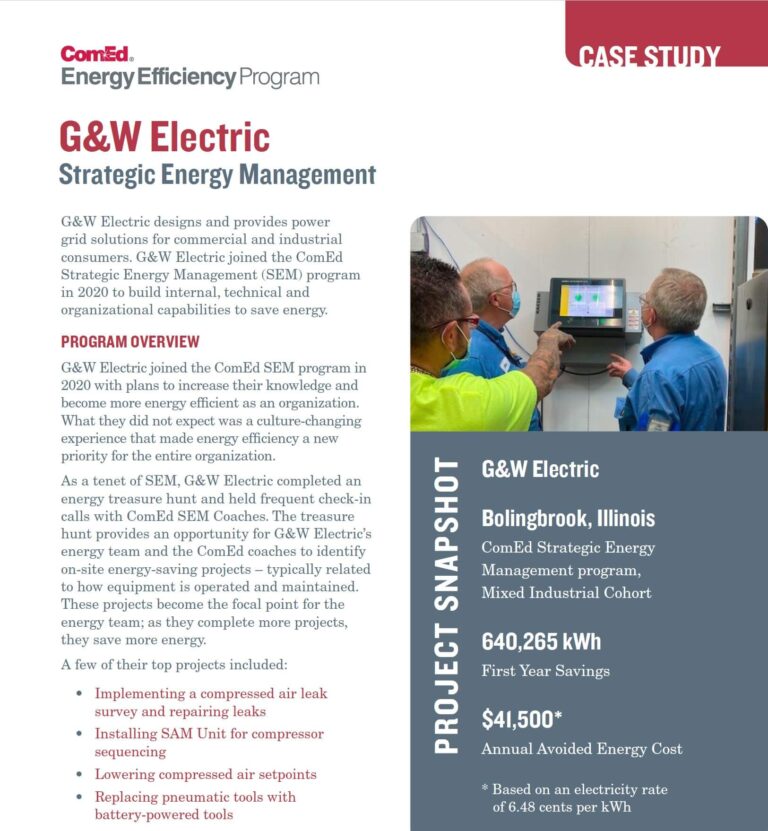
G&W Electric Strategic Energy Management
G&W Electric designs and provides power grid solutions for commercial and industrial consumers. G&W Electric joined the ComEd Strategic Energy Management (SEM) program in 2020 to build internal, technical and organizational capabilities to save…
We start with the diagnosis, not the datasheet
Engineered to order means the specification comes from the site — footprint constraints, flood exposure, the automation platform already in service, the crews who will maintain it. Our application engineers work the problem with your team before anything is built.
These case studies are the record of that work: what was constraining the network, what was engineered in response, and what the utility measured afterward.
Engineered to order. Built to last.
Engineered for your grid, not off the shelf
Working through a footprint constraint, a submersibility requirement, or an SF6 transition of your own? Start with an application engineer, not a catalog.


