
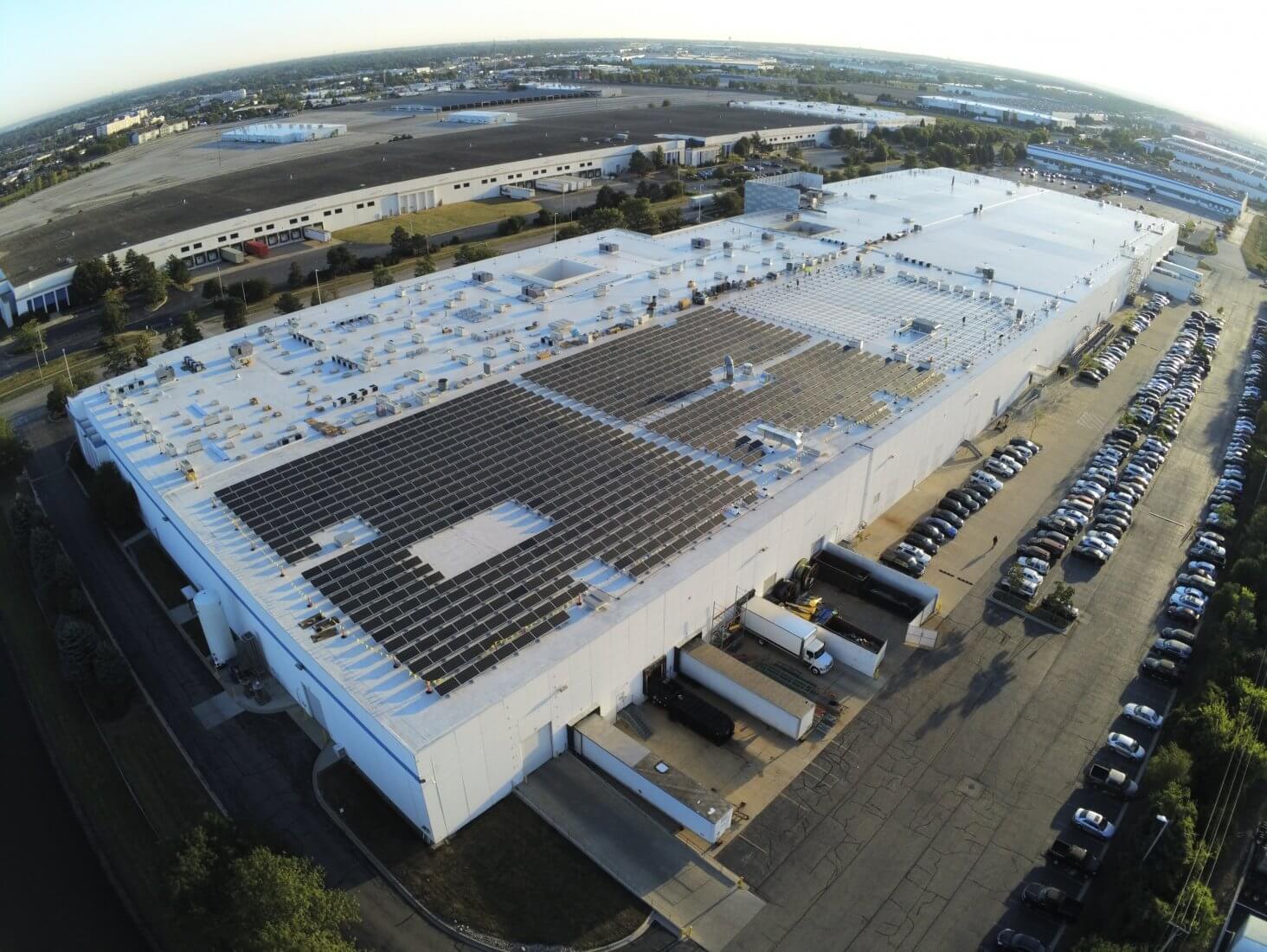
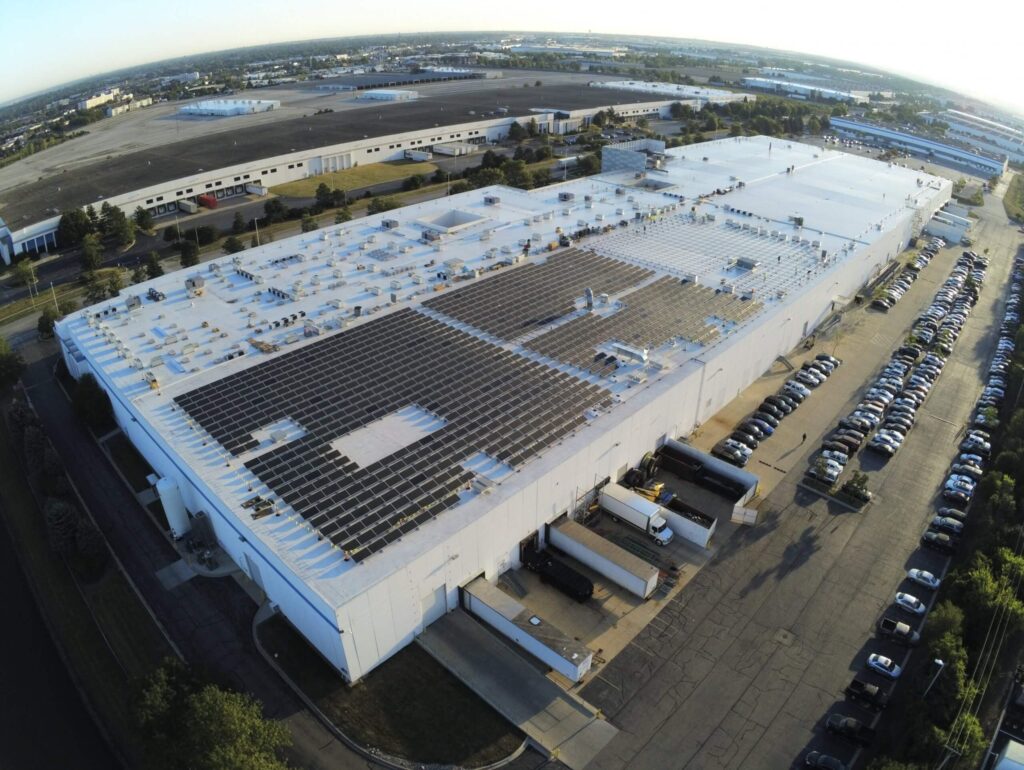
After more than 115 years of industry innovation, G&W Electric entered a new era this year, kicking off construction on what will become one of the largest rooftop solar photovoltaic systems in North America. Starting in 2021, the G&W Electric rooftop solar installation will cover over 370,000 sq. ft. (equivalent to around 7.7 football fields) at our flagship world headquarters in Bolingbrook, IL. This development will be the largest bifacial rooftop solar project in Bolingbrook history, and it marks a large step toward efficiency and sustainability goals for the company.
For decades, solar energy has become an increasingly reliable, cost-effective source of energy for the future. Producing one’s own energy is the best method to provide premium uninterrupted power for critical operations to help avoid unnecessary downtime, rework, and scrap.
G&W Electric recognizes the growing role microgrids play across the industry, and its facility microgrid is designed to support uninterrupted premium power for critical operations at its headquarters.
Curious what sets the solar install of the G&W Electric microgrid apart from the rest? Read on to learn more.
Why Bifacial Solar Panels Were Selected for the Facility Microgrid
Bifacial solar panels were selected to maximize energy generation from the available rooftop space while supporting long-term performance goals. Unlike traditional solar panels, bifacial panels generate power from both the front and rear surfaces, allowing reflected light from the rooftop to contribute to overall output.
At G&W Electric’s facility, this approach improves energy generation efficiency without increasing the footprint of the installation. By incorporating bifacial solar panels into the facility microgrid, the project emphasizes performance optimization through proven technology rather than expanded system size
Cutting Edge Tech
The G&W Electric solar installation at Crossroads Parkway, Bolingbrook, Illinois will be using the latest cutting-edge technology in bifacial solar panels, which will generate energy from both sides of the panels. G&W Electric will install nearly 6,000 solar panels over a white TPO (Thermoplastic Polyolefin – single-ply roofing membrane) roof utilizing a special racking that will boost performance and profitability beyond that of standard solar installations.
High-Quality Products for Improved Performance
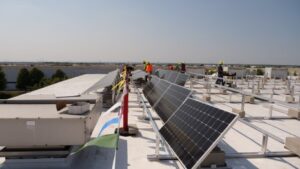
Instead of installing a large quantity of low-cost solar panels, our team chose to install fewer, higher quality, and better performing bifacial solar panels, in order to increase Return on Investment (ROI). The high-tilt design, utilizing an open rail-based, ultra-solid full aluminum rack, over a white roof without any obstructions under the back of the panels will generate 18-20% more energy than a standard monofacial solar panel design would in the same location, not utilizing the reflection on the white TPO membrane and a high module tilt angle.
Innovative Design to Maximize Energy Output
Leveraging bifacial solar panel technology to its peak efficiency, our team of experts has determined that installing the solar panels at a special elevation from the roof –spaced farther away from other rows of panels—will prevent shading and at a higher tilt than usual for the solar industry. This optimizes direct sunlight and reflection from the brand new, highly reflective white roof membrane, reaching the solar panels from both sides, and increasing the output significantly.

How a Large-Scale Rooftop Solar Installation Enhances Facility Operations
The large-scale rooftop solar installation allows the facility to generate electricity on-site while remaining connected to the power grid. This setup supports daily operations by reducing reliance on external power sources during periods of high demand or grid instability.
Within the facility microgrid, rooftop solar generation contributes to a more flexible and resilient energy profile. This approach demonstrates how commercial rooftop solar can support operational continuity and efficiency without altering how the facility interacts with the broader grid.
Looking Ahead: The Future of Solar Innovation at G&W Electric
The future is bright for microgrid technology, and G&W Electric will be your guide, with firsthand experience, to help pave the way toward clean innovation.
Frequently Asked Questions
How do bifacial solar panels differ from standard solar panels?
Bifacial solar panels generate electricity from both the front and rear surfaces, unlike standard solar panels that capture light from one side only. This allows reflected light from the roof to contribute to electricity generation, improving overall performance at the facility.
What role does rooftop solar play within a facility microgrid?
Within a facility microgrid, rooftop solar panels support on-site electricity generation while remaining connected to the power grid. This approach helps manage electrical energy more effectively during normal operations and periods of grid instability.
How do commercial solar projects support long-term facility operations?
Commercial solar projects allow facilities to generate solar power on-site, contributing to a more flexible energy profile. By supporting consistent electricity generation, these projects help facilities manage operational demands without changing existing grid connections.
Can rooftop solar help improve efficiency without major infrastructure changes?
Rooftop solar installations can support electrical energy needs by using existing building space for solar cells and power generation. While results vary by facility, this approach can help improve efficiency and, over time, support efforts to save money through reduced reliance on external electricity supply.


